

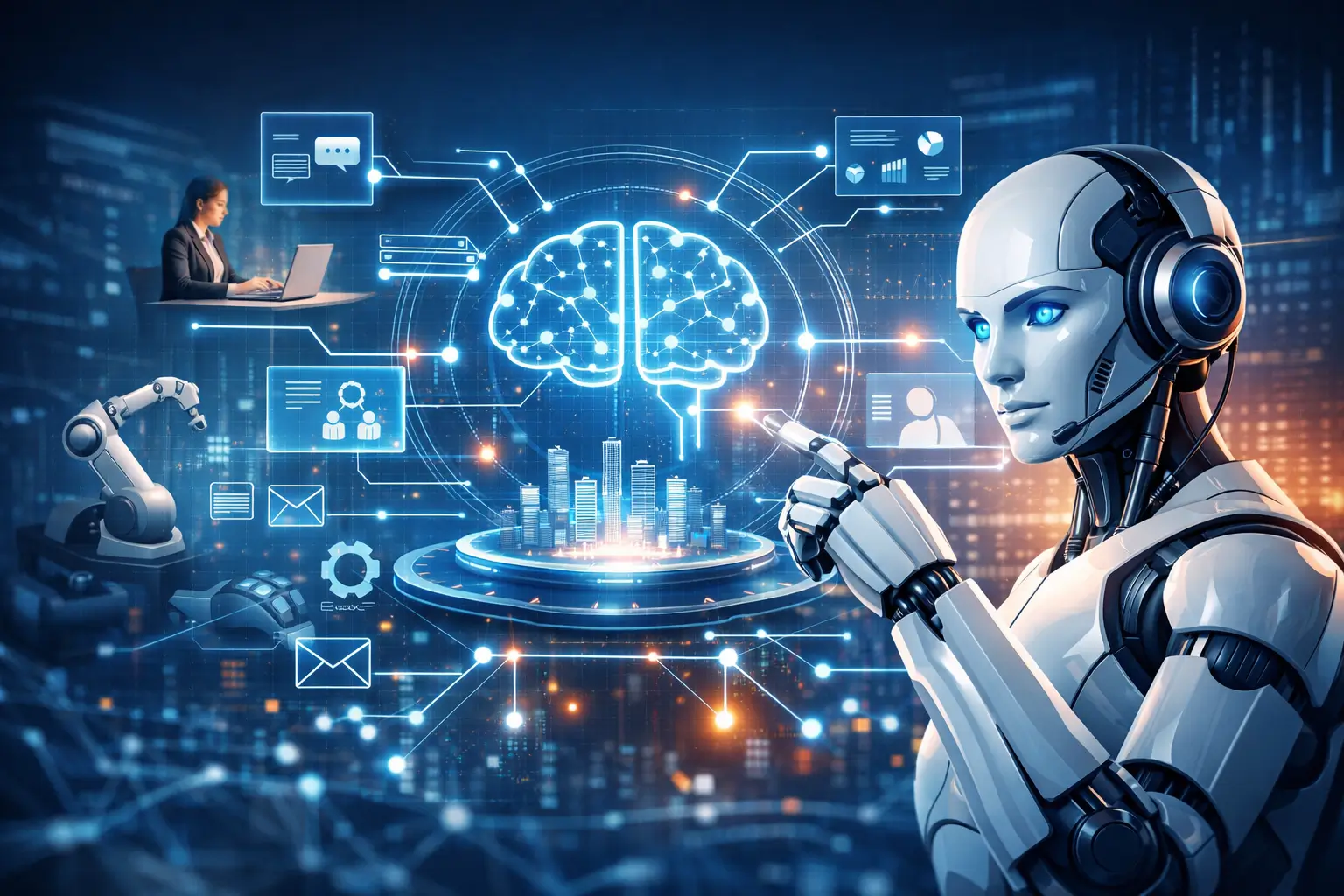
Artificial Intelligence has moved far beyond simple automation tools and chatbots. One of the most significant advancements in recent years is the emergence of AI agent technology. These systems are designed not just to respond to commands, but to act independently, make decisions, and complete tasks with minimal human involvement. As businesses and developers look for smarter ways to scale operations and improve efficiency, AI agents are quickly becoming a foundational part of modern digital systems.
What is AI Agent Technology?
AI agent technology refers to software systems that can perceive their environment, process information, and take actions to achieve specific goals. Unlike traditional programs that follow fixed instructions, AI agents are capable of adapting their behavior based on data and context. At its core, an AI agent operates through a continuous cycle of observing, reasoning, and acting. This allows it to handle complex workflows, interact with multiple systems, and deliver results without constant supervision.
How AI Agents Work
AI agents function through a structured process that enables them to operate intelligently in dynamic environments. First, they collect information from various sources such as user input, databases, or external APIs. This data serves as the foundation for decision-making. Next, the agent processes this information using machine learning models or advanced language models. It evaluates possible actions and selects the most appropriate one based on its objectives. Once a decision is made, the agent executes the task, which could involve sending an email, updating records, or triggering other systems. More advanced AI agents also incorporate learning mechanisms, allowing them to improve their performance over time by analyzing past actions and outcomes.
Types of AI Agents
AI agents can be broadly categorized based on their capabilities and level of intelligence. Reactive agents are the simplest form, responding directly to inputs without storing past experiences. Goal-based agents, on the other hand, are designed to achieve specific objectives and can evaluate multiple approaches before acting. Learning agents represent a more advanced category, as they continuously improve through data and feedback. At the highest level, autonomous agents can operate independently, managing complex processes and making decisions without human intervention.
Applications Across Industries
The practical applications of AI agent technology are vast and continue to expand. In business environments, AI agents are being used to automate customer support, manage workflows, and streamline communication processes. This reduces manual effort and allows teams to focus on more strategic tasks. In e-commerce, AI agents enhance user experience through personalized recommendations, automated order management, and intelligent customer interaction. The healthcare industry is also benefiting from AI agents in areas such as patient monitoring, diagnostics support, and administrative automation. For software development, AI agents are playing an increasingly important role by assisting with code generation, testing, debugging, and deployment processes. This is significantly improving development speed and efficiency.
Benefits of AI Agent Technology
One of the key advantages of AI agents is their ability to operate continuously without fatigue. This makes them highly effective for tasks that require constant monitoring or rapid response. They also reduce operational costs by automating repetitive processes that would otherwise require human resources. Another important benefit is improved decision-making. By analyzing large volumes of data, AI agents can provide insights and execute actions with a level of speed and accuracy that is difficult to achieve manually.
Challenges and Considerations
Despite their potential, AI agents are not without challenges. Their effectiveness depends heavily on the quality of data they receive. Poor or incomplete data can lead to inaccurate decisions. There are also concerns around data privacy and security, especially when AI agents interact with sensitive information. Additionally, implementing AI agent systems can be complex, requiring careful planning, integration, and ongoing monitoring.
The Future of AI Agents
AI agent technology is still evolving, but its future is highly promising. We are moving toward a world where multiple AI agents collaborate to complete tasks, forming interconnected systems that can manage entire business operations. As these systems become more advanced, the line between human and machine collaboration will continue to blur. AI agents are expected to become essential digital assistants, supporting individuals and organizations in ways that were previously unimaginable.
Conclusion
AI agent technology represents a major shift in how software systems operate. By enabling machines to act independently and make intelligent decisions, it is opening new possibilities for automation, efficiency, and innovation. For businesses and developers alike, adopting AI agents is no longer just an option—it is becoming a necessity in staying competitive in a rapidly evolving digital landscape.